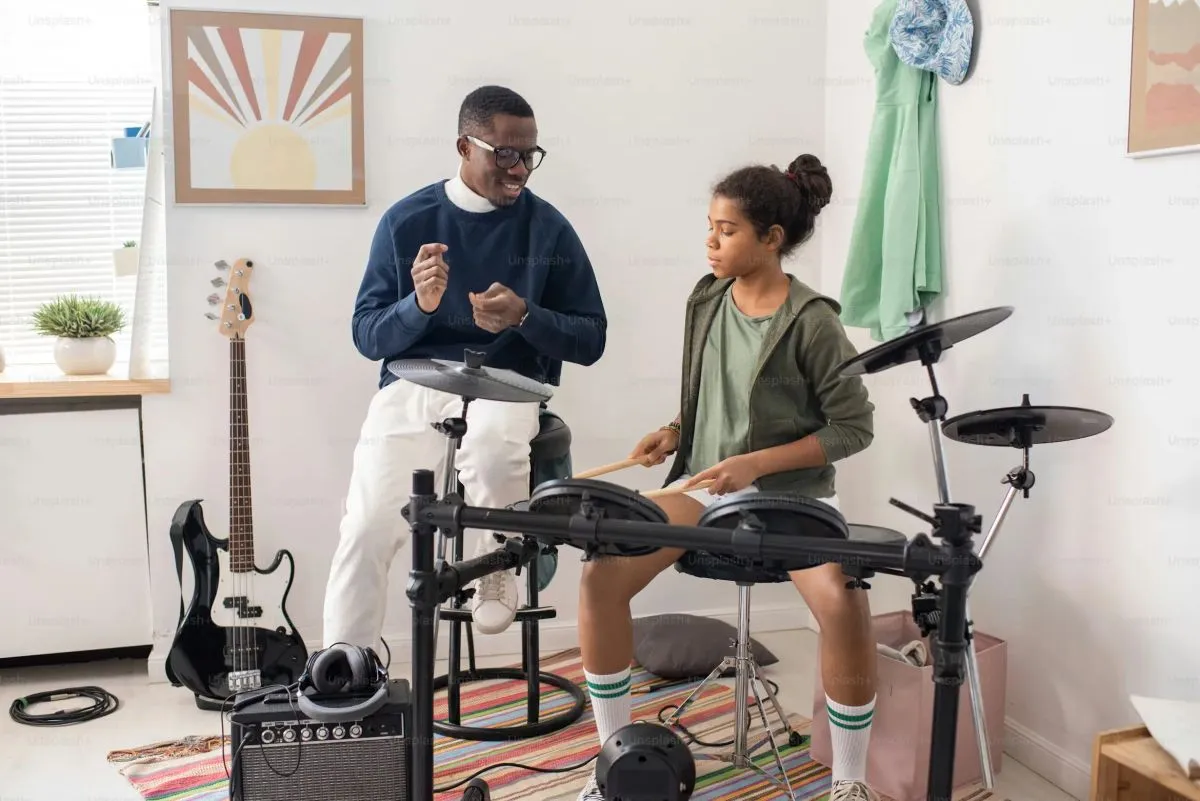
The UK has one of the richest music education traditions in the world. From the Associated Board of the Royal Schools of Music — founded in 1889 and still the world's largest music exam body — to a network of local music hubs, peripatetic teachers, Saturday morning conservatoire programmes, and thousands of independent music schools, the infrastructure for learning music in this country is extraordinarily deep.
If you run a private music school in the UK, you're operating within that tradition. Your students take ABRSM and Trinity exams. Your billing follows the termly rhythms of the school year. Your data handling is governed by UK GDPR. Your safeguarding obligations are defined by the Disclosure and Barring Service. Your tax treatment benefits from specific HMRC exemptions for music tuition.
None of this applies to a music school in Texas or Toronto. And that's precisely why every piece of software, every blog post, and every operational guide built for the US market falls short when a UK music school owner tries to use it.
This guide covers the distinctly British landscape of music education — the exam boards, the regulatory framework, the cultural norms, and the operational patterns that make running a music school in the UK different from anywhere else.
The UK graded exam system
The graded exam system is the backbone of music education in the UK. Unlike many countries where musical progression is informal or institution-specific, the UK has a nationally recognised, externally examined framework that structures how students learn, how teachers plan, and how parents measure progress.
ABRSM (Associated Board of the Royal Schools of Music)
ABRSM is the largest and most widely recognised exam board. Over 600,000 candidates take ABRSM exams annually across more than 90 countries, but its roots are firmly British — it's the exam board of the Royal Academy of Music, Royal College of Music, Royal Northern College of Music, and the Royal Conservatoire of Scotland.
ABRSM offers Practical Grades (1–8) for most orchestral instruments, piano, guitar, singing and more, plus Performance Grades (assessed via video), Music Theory Grades (1–8, online for Grades 1–5), and Diplomas (DipABRSM, LRSM, FRSM) for advanced musicians.
For music school owners, ABRSM exams are the primary measure of student progress that parents understand and value. "My child is doing their Grade 3 piano" is a statement that carries meaning with every parent, grandparent and school teacher in the country.
The practical implications for your school: you need teachers who understand the ABRSM syllabus, repertoire lists and marking criteria. You need a scheduling system that can accommodate exam preparation periods. And you need a way to track which students are preparing for which exams and when. Our guide to managing ABRSM and Trinity exam preparation covers the operational detail.
Trinity College London
Trinity is ABRSM's main rival and has a slightly different flavour. Trinity exams place more emphasis on the student's own musical choices — candidates at higher grades can submit their own repertoire list and there's a stronger focus on contemporary and popular music styles. Trinity also offers Rock & Pop exams for electric guitar, bass, drums and vocals, which appeal to students who don't fit the classical mould.
Many UK music schools offer both ABRSM and Trinity pathways, letting the teacher and student choose the board that best fits their goals and style. Some schools specialise in one or the other, which becomes part of their market positioning.
Rockschool (RSL Awards)
Rockschool specialises in contemporary music — rock, pop, jazz, blues and musical theatre. It's the go-to exam board for electric guitar, bass guitar, drums, keyboards and vocals in contemporary styles. Rockschool exams are accredited by Ofqual and sit on the same Regulated Qualifications Framework as ABRSM and Trinity.
For schools teaching contemporary instruments, Rockschool provides a structured progression pathway that's as rigorous as the classical boards but culturally relevant to students who want to play in bands rather than orchestras.
LCM (London College of Music) and MTB (Music Teachers' Board)
Two smaller boards that offer graded exams with their own syllabuses. LCM is known for its leisure-oriented Leisure Play grades (less formal than standard grades) and its popular music exams. MTB is newer and offers a simpler exam structure that some teachers find more accessible for younger students.
What this means for your school
The exam system creates structure that your school can leverage: clear progression pathways that parents understand, regular milestones that maintain motivation, and measurable outcomes that justify ongoing investment in lessons.
It also creates operational demands: scheduling around exam preparation periods, managing exam registrations (each board has its own entry system and deadlines), tracking which students are at which grade on which instrument, and communicating exam logistics to parents.
A student management system that records each student's current grade, target grade, and exam history across all boards makes this manageable at scale. Without one, you're relying on memory and spreadsheets — which works for 20 students and collapses at 60.
The regulatory landscape
Running a private music school in the UK isn't heavily regulated compared to, say, running a nursery or a school. There's no licence required, no Ofsted registration for most private music schools, and no mandatory curriculum. But there are several regulatory obligations that every school owner must understand.
Data protection (UK GDPR)
If you hold personal data about students, parents and teachers — names, addresses, phone numbers, email addresses, payment details, lesson notes, medical information — you're processing personal data and you're subject to UK GDPR.
The obligations are substantial: you must have a lawful basis for processing (typically "legitimate interests" for the running of your school, or "contract" for billing purposes), you must store data securely, you must respond to subject access requests within one month, you must have a privacy policy, and you must register with the ICO.
For music schools, the most sensitive data involves children. Information about a child's musical abilities, attendance patterns, behavioural notes and family circumstances all qualify as personal data, and some of it may be "special category data" if it reveals health conditions or other protected characteristics.
This is a topic important enough for its own guide — see GDPR for music schools for the full picture.
Safeguarding and DBS
Every person who works with children in your school — teachers, administrators, volunteers — needs an enhanced DBS check. This is a legal requirement for "regulated activity" involving children, and music teaching qualifies.
Beyond the DBS check, you should have a written safeguarding policy, a designated safeguarding lead (even if that's you), a procedure for handling disclosures or concerns, and training for all staff on recognising signs of abuse or neglect.
This isn't optional, and the consequences of getting it wrong extend far beyond regulatory penalties. A safeguarding failure can end a school. Our full guide to safeguarding and DBS for UK music schools covers everything you need to have in place.
Ofsted
Most private music schools are not subject to Ofsted inspection. Ofsted's remit covers state-funded schools, registered childcare providers, and independent schools that are registered with the DfE. A private music school that teaches instrument lessons to children who attend other schools for their main education is generally outside Ofsted's scope.
However, if your music school operates for more than a certain number of hours per week and could be considered to be providing a child's main education (which is extremely rare for music schools), different rules may apply. The vast majority of music schools — even large multi-teacher academies — don't need to worry about Ofsted.
Where Ofsted becomes relevant is if your school partners with state schools or music hubs. Schools and hubs that commission your teaching may require you to meet certain standards, have a safeguarding policy, and demonstrate quality assurance — not because Ofsted is inspecting you directly, but because they're inspecting the school that commissions you.
Insurance
Public liability insurance and professional indemnity insurance are not legally mandatory for all music schools, but they are practically essential. If a student or parent is injured at your premises, or if a parent claims your teaching was negligent, insurance is the difference between a manageable incident and a business-ending one.
Many venue providers (church halls, community centres, schools) require proof of public liability insurance before they'll let you use their space. If you employ teachers, employers' liability insurance is a legal requirement.
Typical costs: £100–£200/year for a combined public liability and professional indemnity policy from a specialist provider.
The UK school year and termly structure
The UK school year creates the rhythm that every music school follows, whether consciously or not. Parents think in terms, students' availability follows the school calendar, and your billing naturally aligns with the academic year.
Three terms, three billing cycles
The standard UK academic year runs from September to July, divided into three terms: autumn (September–December), spring (January–March/April), and summer (April–July). Each term is typically 10–13 weeks, with a one-week half-term break in the middle.
This structure creates a natural billing cycle — termly invoicing — that is uniquely British. US and Canadian music schools typically bill monthly because there's no equivalent termly structure. Australian schools have four terms. The UK three-term model is specific and your billing system needs to support it natively, not as a workaround.
Holiday handling
Half-terms, Christmas holidays, Easter holidays and summer holidays all require your scheduling system to skip lessons without manual intervention. Bank holidays that fall on teaching days (particularly the May bank holidays) need handling. Teacher training days at local schools affect student availability even though they don't affect your school directly.
A scheduling system designed for the UK understands these patterns. One designed for the US doesn't. See our guide to planning your music school academic year for practical frameworks.
Exam seasons
ABRSM and Trinity practical exams run in three main sessions per year, roughly aligned with the terms. Theory exams have their own schedule (ABRSM online theory is available year-round). Exam preparation creates scheduling pressure — students need additional rehearsal time, and the weeks before an exam session are when attendance and practice are most critical.
Schools that plan their term calendar around exam seasons — building in revision weeks, scheduling mock exams, and coordinating entry deadlines — deliver better results and a more professional parent experience.
Music hubs and local authority connections
Since 2012, the UK government has funded music education hubs — partnerships of local organisations that provide music education services in a given area. Hubs are responsible for ensuring every child has the opportunity to learn a musical instrument, and they do this through a mix of in-school teaching, instrument loan schemes, ensemble opportunities, and partnerships with private providers.
As a private music school, your relationship with your local music hub can range from non-existent to deeply collaborative. Some hubs commission private schools to deliver in-school teaching. Some refer students to local private providers when their own capacity is full. Some run joint events and ensembles that your students can participate in.
It's worth contacting your local music hub to understand the opportunities. A referral relationship with the hub — where they direct families to your school — can be a valuable and cost-free acquisition channel.
Why "built for the UK" matters in your software choice
Every operational pattern described in this guide — termly billing, ABRSM/Trinity exam tracking, UK GDPR compliance, GBP currency, HMRC-friendly invoicing, DBS record management, school-year calendar structure — is specific to the UK.
Software built for the US market doesn't understand termly billing. It doesn't know what ABRSM grades are. It doesn't handle UK data protection requirements natively. It doesn't format invoices in a way that works for HMRC. It uses dollars, US date formats, and American English.
This isn't a trivial difference. It's the difference between a system that works with your school and one that you're constantly working around.
LessonLoop was built from the ground up for UK music schools. Termly billing is the default, not an afterthought. GDPR compliance — soft delete, data export, deletion candidates, audit logging — is built into the data model. Currency is GBP. Invoices are HMRC-friendly. The calendar understands UK term dates. And the entire interface is in British English, because "colour" has a "u" and a "term" is not a "semester."
For a comparison of how UK-readiness differs across platforms, see our comparison pages.
Frequently Asked Questions
Do I need any specific qualifications to teach music in the UK?
There is no legal requirement for specific music qualifications to teach privately in the UK. However, qualifications build credibility: ABRSM diplomas (DipABRSM, LRSM, FRSM), university music degrees, PGCE qualifications and instrumental teaching diplomas are all valued by parents. For exam preparation specifically, teachers should have thorough knowledge of the relevant board's syllabus and marking criteria, even if they don't hold a formal teaching qualification.
Are private music schools regulated by Ofsted?
The vast majority of private music schools are not subject to Ofsted inspection. Ofsted inspects state-funded schools, registered childcare providers, and registered independent schools. A private music school offering instrumental lessons to children who attend other schools for their main education falls outside this scope. If you're unsure, consult the DfE guidance on registration of independent schools.
What's the difference between ABRSM and Trinity for my school?
Both are highly respected and Ofqual-accredited. ABRSM is the larger board with more traditional classical roots. Trinity offers more flexibility in repertoire choice and has a stronger contemporary music offering. Many schools offer both and let teachers recommend the best fit for each student. Neither is inherently better — they serve slightly different musical philosophies.
How do music hubs affect private music schools?
Music hubs can be allies rather than competitors. They serve a different market segment (primarily in-school, often subsidised, focused on breadth of access) while private schools serve families seeking more intensive, personalised tuition. Hubs often refer families to private providers when students want to progress beyond what the hub programme offers. Building a relationship with your local hub is strongly recommended.
Is my music school affected by the Music Development Plan requirements?
The National Plan for Music Education (2022) and subsequent Music Development Plans primarily affect state-funded schools, which must publish their plans for music provision. Private music schools aren't directly affected, but you may benefit indirectly: schools implementing Music Development Plans often increase their commissioning of external music providers, creating opportunities for partnerships.
Related reading: The Complete Guide to Running a Music School · Music School Billing Guide · ABRSM & Trinity Exam Preparation · GDPR for Music Schools · Safeguarding & DBS · Built for UK Music Schools
Tags